Dr. Uldanov Antonii, PhD (IUFS – Oxford)
Introduction
The educational system of modern society is facing the need for transformation caused by changes in social structure, technological progress, and labour market demands. These challenges make it relevant to study integrative psychology as a tool for updating pedagogical practices in schools. The integrative approach involves the synthetic combination of knowledge from various psychological fields and pedagogical disciplines, which creates conditions for the formation of a holistic educational environment that stimulates the development of students’ personalities and cognitive abilities.
Modern school education requires the introduction of innovative methods that go beyond the traditional subject structure. This work will analyse ways of integrating disciplines and interdisciplinary methods aimed at increasing students’ motivation and involvement in the educational process. Particular attention is paid to issues of psychological and pedagogical support, which helps not only to adapt students to new learning formats, but also to maintain their emotional and mental well-being in conditions of intense educational load.
Interaction between schools, secondary educational institutions and universities is seen as an important element in building an effective educational chain. The work explores the mechanisms and strategies of such cooperation that facilitate the smooth transition of students to new stages of study and the development of professional competencies. Along with this, the role of integrative psychology in the formation of self-organisation and independent learning skills is analysed, which is critically important for preparing schoolchildren for modern realities.
The first part of the work will reveal the conceptual foundations of integrative psychology and its historical roots, which will allow us to understand the evolution of views on interdisciplinary interaction in pedagogy. Further attention will focus on innovative teaching methods that are being introduced into school practice, taking into account the psychological aspects of the formation of cognitive activity and motivation. A special section will be devoted to psychological and pedagogical support as a tool for modernising education, including an analysis of models of support and counselling for both teachers and students.
Subsequent sections explore the experience of university interaction with the school education system, considering it as an example of the integration of scientific and educational activities. An overview of specific examples of the implementation of innovations based on integrative psychology will also be presented, along with case studies that confirm the effectiveness of such approaches in improving the quality of education. The conclusion of the work discusses the prospects for the further development of innovative educational practices based on comprehensive psychological support and the synthesis of pedagogical technologies.
Thus, the topic under analysis combines psychological and pedagogical knowledge to create new educational strategies aimed at personal development and preparing schoolchildren for the challenges of a rapidly changing world. The work is aimed at a deep understanding of innovative processes in education and the development of recommendations that can improve the level of school education through the practical application of integrative psychology.
1. Prospects for the development of innovative educational approaches based on integrative psychology
Modern education faces a number of challenges, among which it is necessary to highlight the need for personalisation of the learning process, rapid updating of knowledge and skills, and the growing complexity of information assimilation in conditions of information overload. Schools must build an educational environment that takes into account the individual characteristics and level of preparation of each student, as well as ensure the development of critical thinking, creativity, and social skills that are in demand in the 21st century. In addition, there is a growing need to develop students’ digital literacy skills and their ability to interact effectively with the latest technologies in their daily lives and future professional activities [30][9].
One promising trend is the widespread introduction of digital technologies that are fundamentally changing the structure and forms of education. Virtual and augmented reality provide opportunities for interactive and visual learning, transporting students to historical eras, laboratories or natural ecosystems, which significantly improves the quality of perception and depth of understanding [15][30]. Artificial intelligence allows curricula to be adapted to the unique needs of each child, offering tasks that correspond to their level and style of information assimilation. Automated support systems not only reduce the burden on teachers, but also make learning more effective and motivating.
Gamification, which includes game mechanics, ratings, and quests, promotes active engagement among schoolchildren, increases interest, and helps to form lasting motivation to learn. In addition, this technique develops teamwork and strategic thinking skills, which are important in integrative education [30]. Blockchain technologies, although still in the early stages of implementation, promise to ensure the transparency and security of digital certificates, as well as stimulate academic achievement through motivational tokens, opening up new horizons for the system of assessment and recognition of student competencies.
Despite all the technological innovations, the key role of the teacher remains, but its content is changing. The teacher is becoming a mentor and digital curator who helps students navigate large amounts of information, develops their critical thinking, and shapes their emotional intelligence, creativity, and communication skills. Teaching digital literacy and the skilful use of analytical data allows teachers to personalise the educational trajectory of each student and adjust teaching methods in real time [21][29].
The dynamic nature of changes in the educational environment requires systematic training of both students and teachers in new teaching formats and technologies. This includes the development of sustainable digital competence and a readiness for continuous learning and adaptation, which is the basis for the successful functioning of the school of the future. The prospect of integrating these innovations is shaping an educational ecosystem where technology is not an end in itself, but a tool for unlocking the potential of each student [9].
Thus, the development of integrative psychology in combination with innovative educational technologies paves the way for the school of the future, which will be characterised by flexibility, personalisation and a high level of student motivation. In such a school, the synthesis of digital and human resources will create conditions for the comprehensive development of the individual, forming the skills necessary for a successful life in modern society and the changing labour market. This helps to overcome existing problems and opens up new opportunities for quality education that meets the challenges of the times [15][30][21].

Figure 1 — Modern educational and teaching technologies in the context of innovation and integrative psychology
2. The concept of integrative psychology in modern education
Integrative psychology is a relatively new field that has emerged in response to the increasing complexity of psychological knowledge and the need for a comprehensive approach to studying and influencing the human psyche. The term ‘integrative’ comes from a Latin word meaning “whole” or ‘restoration,’ which reflects the essence of the method — the unification of various psychological theories and practices into a single system that takes into account the multifaceted nature of the personality and its unique characteristics [33].
The origins of the integrative approach in psychology date back to the mid-20th century, when the need arose to overcome the limitations of individual therapeutic schools. In the 1950s, psychoanalysis and behaviourism prevailed, but they did not always provide effectiveness for all clients. It was then that the first integrative models began to take shape, combining techniques from different areas with an emphasis on the individual needs and context of the client, which continues to develop to this day [32].
The main principles of the integrative approach are individualism — the recognition of each person’s uniqueness, flexibility in the choice of methods, the integrity of the perception of the personality as a synthesis of physical, emotional, spiritual and intellectual components, as well as the cooperation between the psychologist and the client, aimed at personal development and not just the elimination of symptoms [12]. This allows for the application of a wide range of methods — from psychodynamic techniques focused on the unconscious to cognitive-behavioural, humanistic, and existential approaches, which expands the possibilities for therapy and correction of various problems [11].
In school education, integrative psychology is particularly important, as the educational process affects the comprehensive development of the child — intellectual, emotional, social and personal. The use of integrative principles contributes to the formation of a learning environment that takes into account the individual characteristics of students and also helps educators develop educational programmes and training courses aimed at developing self-regulation, communication and creativity skills. This approach not only contributes to a more thorough consideration of students’ mental and emotional needs, but also increases the effectiveness of learning through the flexibility and adaptability of methods [14].
Integrative psychology in education helps to build individual support schemes, which is especially important in the context of diverse school communities and changing requirements for educational outcomes.
The application of various psychological concepts and techniques makes the learning process more conscious and the interaction between teacher and student more productive and harmonious. This reflects the current trend of moving from a mechanistic to a holistic perception of the educational process, where the personality of the student is considered in relation to the surrounding social and educational environment [33].
Thus, integrative psychology in the context of school education becomes not just a theoretical basis, but a practical tool that contributes to personal development through comprehensive support and adaptation of teaching to the real needs of students. This creates a solid foundation for the introduction of innovative teaching methods that require a comprehensive approach and a deep understanding of the student’s psychology as a holistic system interacting with the educational space.
3. Historical background to the development of integrative approaches in pedagogy
The pedagogical theories that laid the foundations for integrative approaches have deep historical roots and were formed gradually in the process of the development of educational thought. In the 17th century, J.A. Comenius was one of the first to draw attention to the need to teach interrelated knowledge as a unified system. He emphasised that subjects should not be studied in isolation, since ‘everything that is interconnected should be taught in the same connection’ [13]. This idea became the foundation for the formation of holistic education, aimed at developing students’ ability to see and understand the interaction of phenomena and subjects.
In the 19th century, the concept of a holistic cognitive process was further developed thanks to the works of K.D. Ushinsky. He focused on interdisciplinary connections, as well as on the need for continuity in the content of educational programmes. Ushinsky believed that pedagogy should be structured in such a way as to enrich the thinking of schoolchildren through the interconnection of sciences, contributing to the comprehensive development of the individual, their moral and intellectual qualities. These ideas formed the basis of a holistic approach in pedagogy, contributing to the formation of systematic thinking in students [35].
Since the Renaissance, the experience of integrating knowledge has been studied by B.M. Kedrov, who viewed the process of synthesising sciences as an organic transition between disciplines. He emphasised the importance of combining scientific knowledge to raise the overall level of personal and social development. Developing the idea of integration, Kedrov highlighted it as a methodological basis for forming a holistic picture of the world, thus laying the conceptual foundation for the further introduction of integrative approaches into pedagogical practice [35].
In the 20th century, the methodological development of integrative pedagogy was systematically formalised thanks to the research activities of M.S. Pak. She formulated the conceptual apparatus of integrative learning and identified the key functions of integration: methodological, educational, upbringing, developmental, and constructive. Pak also identified the main aspects of integration in teaching: methodological, general pedagogical, psychological, didactic, methodological, and personal-activity. Her works describe the integrative approach not simply as a pedagogical technique, but as an independent didactic principle based on social orientation, the integrity of the educational process, and the interaction between teacher and student [22].
Other scholars, such as O.M. Sichivitsa, N.T. Kostyuk, and A.D. Ursul, analysed various forms and levels of integration of scientific knowledge in pedagogy. They distinguished between types of integration ranging from reductionist and generalising to sociocultural, reflecting the diversity of ways in which teaching material and knowledge structures can be combined in the educational process. These studies contributed to the systematisation of the theoretical foundations of integration, which subsequently gave impetus to the formation of multi-level methodological approaches in education [7].
In practice, integrative methods began to be widely used at all levels of education. In school pedagogy, interdisciplinary connections, such as combining chemistry with Russian language, mathematics, and history, contributed to the comprehensive development of students, the formation of creative thinking, and facilitated the transition to higher education. In the university environment, the integrative approach has become the basis for competence- and personality-oriented learning, which has increased student motivation and the quality of training [35].
Thus, integrative methods in pedagogy have undergone a long evolution: from the ideas of Comenius and Ushinsky, through systematic research and methodological developments of the 20th century, to the formation of an independent scientific field that serves as the basis for modern innovative educational practices.
4. Innovative teaching methods in the context of school education
Modern school education is introducing innovative teaching methods that make the process of acquiring knowledge more active and focused on the inclusion of each student. These methods are applicable in traditional classrooms, as well as in online and hybrid formats, which ensures a high degree of flexibility in the organisation of the educational process and takes into account the diversity of educational conditions [1].
One of the newest approaches is interactive lessons that use modern digital tools: online platforms for voting, quizzes, anonymous surveys, and group discussions. Such methods increase student engagement and confidence, stimulate dialogue and knowledge exchange, and create a motivational atmosphere in the classroom. At the same time, they ensure the active participation of even those students who usually remain in the shadows with the traditional approach [1].
Virtual reality (VR) technologies create an immersive educational space, allowing children to ‘immerse’ themselves in the material being studied. A trip to Mars, studying the internal structure of a cell, an excursion to Ancient Rome — all of this becomes an interactive experience that significantly improves memorisation and understanding of complex topics. Such technologies contribute to the development of imagination and spatial thinking, which traditional methods of information assimilation do not always provide [1].
The use of artificial intelligence (AI) in schools is aimed at automating routine processes: checking assignments, creating adaptive curricula tailored to individual student abilities, and supporting communication between teachers and students. At the same time, AI acts as an auxiliary tool that helps teachers focus more accurately on developing students’ personal and professional qualities, rather than replacing them in educational activities [1].
Blended learning is the integration of face-to-face and digital formats using video conferencing, interactive platforms, and the “flipped classroom” concept. In this approach, students study theoretical material at home using digital resources, and in class they practise skills and solve practical problems, which increases the effectiveness of knowledge acquisition and allows for flexible planning of study time [1].
Another example of an innovative method is 3D printing, which makes it possible to create physical models for studying abstract or complex concepts. This practice develops students’ spatial thinking, design skills and creative approach to problem solving, which is important for the formation of a comprehensive scientific worldview [1].
The design thinking methodology is integrated into the educational process as a creative and problem-oriented approach. It stimulates collective creativity, the ability to see problems from different angles and find non-standard solutions in collaboration with classmates, which strengthens students’ social skills and responsibility for the results of their work [1].
The significance of these innovative methods is evident in the development of critical thinking, teamwork skills and creative potential in students. They contribute to the creation of a learning environment that supports initiative, independence and increased motivation to learn. At the same time, effectiveness is achieved through a balanced combination of digital technologies and live, personal interaction with the teacher, which preserves the human factor in education [10].
Thus, innovative teaching methods are becoming an indispensable tool in preparing schoolchildren for the challenges of the modern world and are radically changing the traditional view of the role of the teacher and student in the educational process. The introduction of such technologies and strategies makes it possible to create a more flexible, personalised and motivating learning experience focused on the development of universal competencies and skills that will be in demand in the future [9].
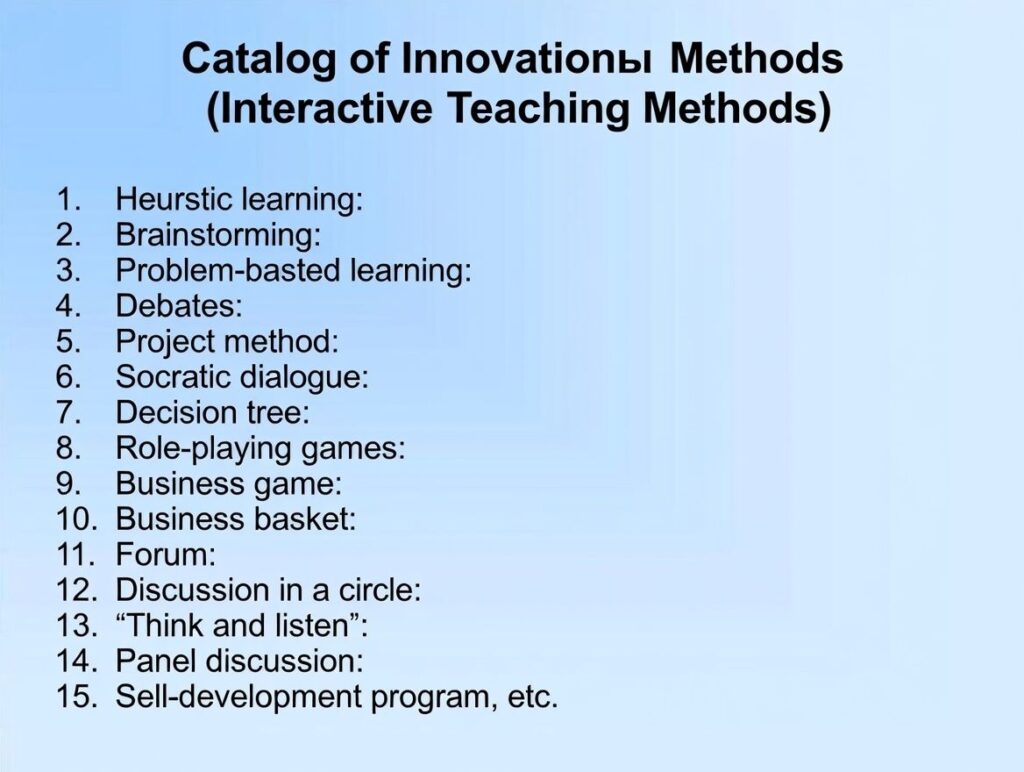
Figure 2 — Innovative teaching methods in school education: diagrams and examples
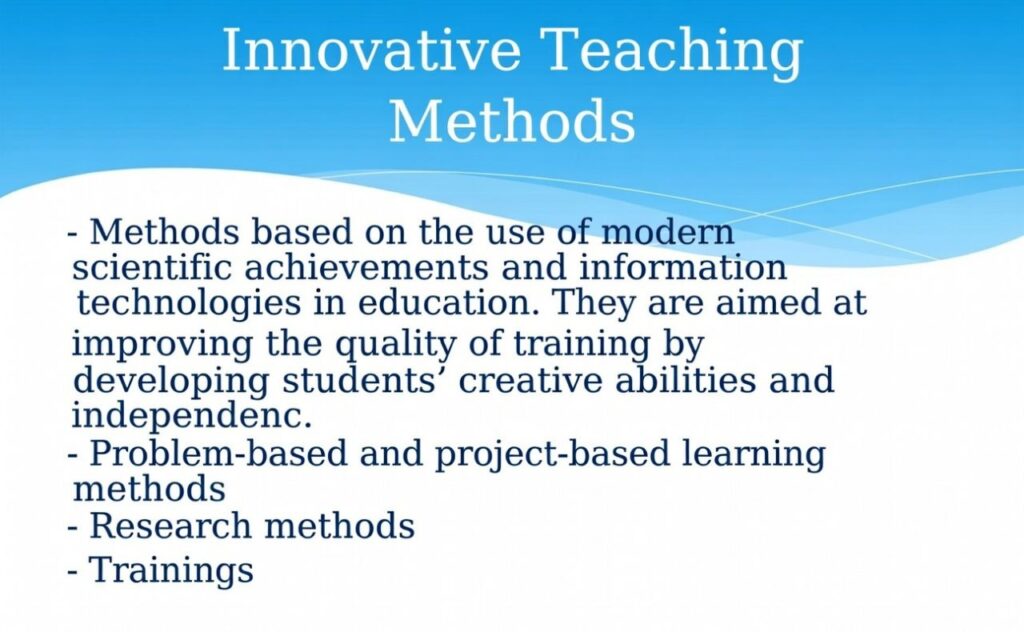
Figure 3 — Innovative teaching methods in school education: diagrams and examples
5. The role of psychological and pedagogical support in the modernisation of education
Psychological and pedagogical support in the current context of school education reform serves to create additional conditions that contribute to the successful completion of the curriculum and the personal development of students. This is a systematic and long-term process aimed at supporting children, taking into account their individual characteristics, which is particularly relevant in the context of increasing educational requirements and the diversity of student needs [3].
The distinctive feature of this support is its comprehensive nature: several specialists are involved in the educational process — a tutor, an educational psychologist and a social pedagogue, each of whom performs specialised tasks. The tutor provides individual support in adaptation and career guidance, the educational psychologist helps to work with internal conflicts and develop personal resources, and the social pedagogue focuses on correcting behavioural difficulties and interacting with social services. This interdisciplinary interaction creates an effective space for solving complex and multifaceted problems faced by schoolchildren [24].
Psychological and pedagogical support is not a mandatory component of basic education and acts as an additional resource. At the same time, for children with special educational needs (SEN), this mechanism often becomes a necessity, as it provides them with equal access to educational opportunities and helps them adapt to school requirements. For other students, support may include preventive and developmental activities, which sometimes causes parents to worry about control and pressure; however, practice shows that, when the principle of respect for the rights and interests of the child is observed, this contributes to the creation of a ‘caring’ educational environment without violence or coercion [26][34].
The main tasks of psychological and pedagogical support include the diagnosis and early detection of difficulties in learning, development and socialisation, the prevention of crisis situations, the correction of behavioural and emotional disorders, and the support of the student’s creative and personal potential. In addition, support specialists improve the psychological competence of teachers and parents, which contributes to more conscious interaction between all participants in the educational process [25][3].
In practice, psychological and pedagogical support is implemented through individual support plans, adaptation programmes, and counselling for families and teachers. For example, a child experiencing difficulties due to family problems receives comprehensive support, including psychological assistance and adaptation of educational requirements. When specific disorders such as dyscalculia are identified, assistance includes diagnosis and the development of an individualised learning programme with the participation of specialists, which helps to minimise the student’s lag and improve their self-esteem [24].
In 2025, the Ministry of Education of the Russian Federation consolidated and structured the processes of psychological and pedagogical support, identifying it as a priority in the context of inclusive education and designing interaction between teachers, psychologists, parents and students in such a way as to increase the effectiveness and quality of support. Particular attention is paid to creating conditions for each child to realise their potential and to creating an environment that promotes harmonious development, rather than just eliminating problems [25].
Consequently, psychological and pedagogical support is becoming an indispensable element of the modernisation of school education, providing the flexible and targeted support necessary for the successful implementation of innovative teaching methods. Its significance lies in the fact that it creates a ‘safe’ space where education is adapted to the personalities of students, which increases the effectiveness of reforms and contributes to the social adaptation of students in a rapidly changing world [26][34].

Figure 4 — Structure of psychological and pedagogical support in the educational process
6. University cooperation as a means of supporting school education
Cooperation between schools and higher education institutions takes several organisational forms, each of which is aimed at deepening professional experience and maintaining educational continuity. One of the key types of cooperation is network interaction, which allows students of pedagogical universities to immerse themselves in a real professional environment by participating in joint projects and events with educational institutions. This format not only develops professional skills that meet current standards, but also contributes to the development of independence and responsibility in future teachers [28].
In addition to networking, internships and work placements are widely used, where students have the opportunity to work directly in school teams, observing and participating in the educational process. The importance of this element is enhanced by the integration of new types of activities, such as organising master classes, conducting joint research and professional trials, which broadens competencies and helps students to navigate professional requirements more easily [5].
Partnerships between schools and universities are built on the basis of a mutually beneficial exchange of resources, experience and knowledge. Educational institutions jointly develop methodologies, programmes and teaching materials, as well as introduce innovative forms of teaching that ensure the adaptation of content to modern requirements. Against this backdrop, the collective roles of teachers and students are developing, in particular through cooperation in organising events and jointly managing educational projects, which stimulates communication and professional interaction [4][8].
Particular attention is paid to career guidance aimed at helping schoolchildren make informed career choices. Interaction with universities includes the use of web technologies to increase the independence of senior school students, the organisation of multi-stage programmes including professional trials and internships, and participation in research activities. Such initiatives help students form an accurate picture of their future profession and develop the skills necessary for successful further education [5].
An important aspect of the long-term development of cooperation is the comprehensive integration of the efforts of three parties — schools, universities and enterprises — with the aim of creating a ‘schoolchild — student — young specialist’ system. This ensures a smoother and more informed transition from education to professional activity, taking into account the requirements of the modern labour market and socio-economic conditions [19].
Thus, models of cooperation between schools and universities cover a wide range of forms of interaction, from network projects to internships and career guidance. Such partnerships not only contribute to the professional development of future teachers and specialists, but also guarantee the continuity of education, providing schoolchildren with support in choosing and building their future educational and career paths.
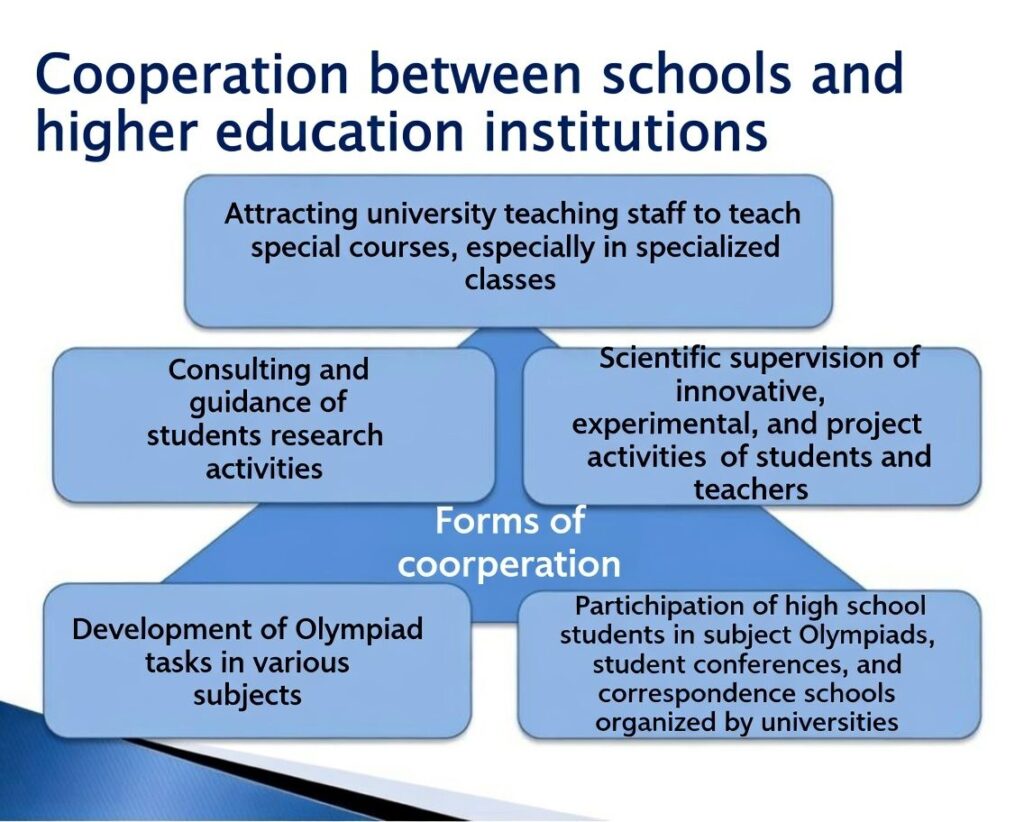
Figure 5 — Diagram of cooperation between schools and higher education institutions and forms of interaction
7. Using an integrative approach to increase learning motivation
Combining academic disciplines within an integrative approach contributes to a significant increase in learning motivation by helping students form a holistic perception of knowledge, which is impossible when subjects are studied separately. Integrated lessons stimulate cognitive interest, as students see the connections between phenomena from different areas, which broadens their understanding and creates a sense of completeness and significance of the learning material [6]. Such interrelationships contribute not only to the accumulation of facts, but also to the development of systematic thinking, allowing students to construct logical, multifaceted representations of the world.
Students’ social motivations are also strengthened through integrative learning. Working together in interdisciplinary lessons creates a comfortable and supportive atmosphere where interaction with the teacher becomes more fruitful and emotionally positive. This is especially important in adolescence, when the relationship between teacher and student influences internal motivation and the desire to achieve academic success [23]. Thus, an integrative approach contributes to the formation of a favourable climate where positive emotions motivate active participation in the learning process.
The integration of disciplines requires teachers to apply new methods and an activity-based approach, which stimulates their professional growth and improves the quality of their interaction with students. This changes the teaching style: teachers become more involved and flexible, adapting the teaching material to the interests and needs of each class. As a result, lessons become more dynamic and varied, which maintains the interest of many students and increases their motivation to learn [31].
In higher education institutions, the integrative approach also has a positive impact on student motivation, helping them to see the practical significance and interconnection of the knowledge they acquire. This allows for a more informed approach to the choice of study programmes and professional development, which further stimulates learning activity and responsibility for one’s own education [6].
Thus, the use of an integrative approach forms productive cognitive motives in students, stimulates the development of systematic thinking, and creates favourable social conditions for learning. All these factors together not only increase interest in learning, but also improve educational outcomes, contributing to a deeper and more meaningful assimilation of knowledge compared to traditional fragmented learning [17][18].
8. Case studies: successful examples of innovation implementation based on integrative psychology
The implementation of integrative approaches based on psychological and pedagogical support in schools demonstrates successful practical results that serve as examples for the further dissemination of innovations. One of the most striking cases is School No. 1308 in Moscow, where a comprehensive model of student support is being implemented, covering both academic and personal development. Here, the integration of psychology with various subject areas not only improves the quality of learning, but also improves the emotional state and motivation of schoolchildren [2].
In biology lessons, students learn about the psychological aspects of the human psyche by studying anatomy with the help of a teacher-psychologist, which contributes to the awareness of their own personality characteristics and the development of self-regulation skills. Practical classes help to concretise theoretical material and assimilate it through experience, which increases students’ involvement in the learning process. Similarly, geography lessons include topics of ethnopsychology, which contribute to the development of tolerance and understanding of cultural differences, which is important for the formation of social competence [2].
In the context of the integrative model, humanities and aesthetic disciplines are aimed at personal growth and self-knowledge, which raises the educational process to a level where learning becomes a means of internal transformation. This combination contributes to the expansion of value orientations and stimulates active participation in learning through the formation of sustainable internal motivation, which traditional methods do not always provide [27][2].
Within the framework of this model, multi-level support is implemented, taking into account the individual characteristics of students, including temperament, mental processes, experience, and personality orientation. This allows for the creation of individualised support strategies that increase the adaptability of learning and contribute to the development of each child according to their personal potential.
Based on K.K. Platonov’s personality model, the practice of diagnosing and identifying typical personality characteristics helps teachers and psychologists to adjust their pedagogical approaches as effectively as possible [20].
In addition, the integration of personality-oriented, competence-based and reflective approaches into the educational process is aimed at developing students’ subjectivity: the transition from a ‘knowledge’ paradigm to an ‘activity’ paradigm allows schoolchildren to actively engage in educational activities and develop the skills necessary for a successful life and professional fulfilment. This creates favourable conditions for sustainable educational growth and social adaptation [27].
Experience shows that the application of integrative psychology in educational practice contributes to the comprehensive support of students, increases their motivation and develops their self-regulation and tolerance skills. The prospects for the dissemination of such models lie in the expansion of network interaction with universities to improve the scientific and methodological base, as well as the introduction of individual diagnostic and corrective programmes adapted to different levels of personal development. This will make it possible to create an adaptive educational space that meets modern requirements and challenges [16][2].
Thus, specific examples of the practical implementation of the integrative approach confirm its high effectiveness and the need for its systematic introduction into school education with the aim of developing a holistic personality and improving the quality of the educational process.
Conclusion
The study revealed that integrative psychology serves as the foundation for the formation of new educational strategies that contribute to the comprehensive development of the student’s personality. Analysis of theoretical and practical aspects showed that combining psychological concepts and pedagogical methods allows for the creation of an adaptive educational environment focused on the individual characteristics of each student. This approach ensures not only the acquisition of knowledge, but also the development of self-regulation, critical thinking, and social adaptation skills.
A historical review has highlighted the continuity and evolution of integrative methods in pedagogy, starting with the ideas of classical pedagogues and ending with modern scientific developments. This continuity confirms the importance of developing a holistic and interdisciplinary approach to teaching as a key tool in educational practice. Modern innovative methods, including digital technologies, virtual reality and gamification, demonstrate high effectiveness in creating a motivational and interactive learning environment, which further enhances the potential of the integrative approach.
The role of psychological and pedagogical support, which provides systematic support to students and teachers, has become particularly important. The organisation of interdisciplinary interaction between specialists contributes to the timely identification and correction of difficulties, expands the possibilities for adapting the educational process and improves the quality of teaching. The introduction of such practices makes the school environment more flexible and resilient to the challenges of the modern world.
Interaction between schools and universities is an important link in supporting school education, strengthening the connection between theoretical training and practical experience. Joint projects, internships and career guidance programmes help students make informed choices and prepare for their careers, which contributes to the continuity of their educational path and increases the competitiveness of graduates.
The use of an integrative approach has had a positive impact on learning motivation, creating conditions for the formation of a holistic perception of knowledge and active involvement in the learning process. Productive cognitive and social motives are formed, which contributes to the development of systematic thinking and readiness to independently solve complex problems. Practical implementation cases confirm the effectiveness of integrative models as innovative tools that improve the quality and accessibility of school education.
Based on the results obtained, it can be concluded that integrative psychology and innovative teaching methods are integral components of the modernisation of the school education system. Their comprehensive application makes it possible to respond to the challenges of modern society, improve the quality of the educational process, and create conditions for the comprehensive development of the student’s personality. For further improvement, it is necessary to expand network interaction between educational institutions, strengthen psychological and pedagogical support, and systematically integrate innovative technologies, which will ensure the sustainability and effectiveness of educational practices in a changing world.
Bibliography
1. 15 innovative teaching methods (+ examples)… [Electronic resource] // ahaslides.com – Access mode: https://ahaslides.com/ru/blog/15-innovative-teaching-methods/, free. – Title from screen
2. untitled [Electronic resource] // www.e-osnova.ru – Access mode: https://www.e-osnova.ru/PDF/osnova_14_4_2089.pdf, free. – Title from screen
3. What is psychological and pedagogical support? [Electronic resource] // appkk.ru – Access mode: https://appkk.ru/info/blog/v_chem_zaklyuchaetsya_psikhologo_pedagogicheskoe_soprovozhdenie/, free. – Title from screen
4. Interaction between schools and universities in modern conditions [Electronic resource] // scipress.ru – Access mode: https://scipress.ru/pedagogy/articles/vzaimodejstvie-shkoly-i-vuza-v-sovremennykh-usloviyakh.html, free. – Title from screen
5. Platonova Raisa Ivanovna, Nikitina Anastasia Egorovna, Son Qi INTERACTION BETWEEN SCHOOLS AND UNIVERSITIES IN ORGANISING CAREER GUIDANCE WORK WITH SENIOR SCHOOL STUDENTS IN MODERN CONDITIONS // Azimuth of scientific research: pedagogy and psychology. 2024. No. 2 (47). URL: https://cyberleninka.ru/article/n/vzaimodeystvie-shkoly-i-vuza-po-organizatsii-proforientatsionnoy-raboty-so-starsheklassnikami-v-sovremennyh-usloviyah (28.08.2025).
6. Dissertation on the topic ‘Improving academic motivation…’ [Electronic resource] // www.dissercat.com – Access mode: https://www.dissercat.com/content/povyshenie-uchebnoi-motivatsii-obuchayushchikhsya-osnovnoi-i-polnoi-srednei-shkoly-sredstvam, free. – Title from screen
7. From the history of integrated learning — | Article in the journal… [Electronic resource] // moluch.ru – Access mode: https://moluch.ru/th/4/archive/39/1306, free. – Title from screen
8. Innovative interaction between universities and schools within the framework of… [Electronic resource] // mir-nauki.com – Access mode: https://mir-nauki.com/PDF/47PDMN623.pdf, free. – Title from screen
9. Innovative teaching methods in modern schools: experience… [Electronic resource] // www.teacherjournal.ru – Access mode: https://www.teacherjournal.ru/categories/1/articles/13776, free. – Title from screen
10. Innovative forms and methods of teaching in schools [Electronic resource] // www.defectologiya.pro – Access mode: https://www.defectologiya.pro/zhurnal/innovaczionnyie_formyi_i_metodyi_obucheniya_v_shkole/, free. – Title from screen
11. Integrative psychology – Psychologists [Electronic resource] // psychologists.rf – Access mode: https://психологи.рф/%D0%B8%D0%BD%D1%82%D0%B5%D0%B3%D1%80%D0%B0%D1%82%D0%B8%D0%B2%D0%BD%D0%B0%D1%8F-% D0%BF%D1%81%D0%B8%D1%85%D0%BE%D0%BB%D0%BE%D0%B3%D0%B8%D1%8F/, free. – Title from screen
12. Integrative psychology: what it is, how it differs… [Electronic resource] // www.b17.ru – Access mode: https://www.b17.ru/article/integrativnaya_psihologiya_chto_eto_v_chem_otlichiya_i_konkurentnye_preimuschestva/, free. – Title from screen
13. An integrative approach to teaching: past and present [Electronic resource] // pedagogika.snauka.ru – Access mode: https://pedagogika.snauka.ru/2016/07/5815, free. – Title from screen
14. An integrative approach: what it is in simple terms, when… . [Electronic resource] // talentsy.ru – Access mode: https://talentsy.ru/blog/chto-takoe-integratsiya-v-psihologii/, free. – Title from screen
15. How future technologies will change schools: is it worth it… | Blog 4brain [Electronic resource] // 4brain.ru – Access mode: https://4brain.ru/blog/kak-tehnologii-budushchego-izmenyat-shkolu-stoit-li-gotovitsya-k-revolucii-v-obrazovanii/, free. – Title from screen
16. METHODOLOGY OF MODERN [Electronic resource] // kozlov-official.ru – Access mode: https://kozlov-official.ru/wp-content/uploads/2023/09/metodologia_3_2023.pdf, free. – Title from screen
17. Interdisciplinary integration as a means of motivating learning… [Electronic resource] // solncesvet.ru – Access mode: https://solncesvet.ru/opublikovannyie-materialyi/mejpredmetnaya-integraciya-kak-sredstvo-.5824725/, free. – Title from screen
18. Interdisciplinary integration as a factor in improving learning. .. [Electronic resource] // kssovushka.ru – Access mode: https://kssovushka.ru/zhurnal/15/1513-mezhpredmetnaya-integratsiya-kak-faktor-povysheniya-uchebnoi-motivatsii-u-mladshih-shkolnikov/, free. – Title from screen
19. Ministry of Education of the Russian Federation [Electronic resource] // edsoo.ru – Access mode: https://edsoo.ru/wp-content/uploads/2025/09/mr_sh_v_p_2025.pdf, free. – Title from screen
20. Romanova Evgenia Sergeevna, Ryabova Irina Viktorovna, Makshantseva Lyudmila Viktorovna On the creation of an integrative model of psychological and pedagogical support for the educational process in modern schools // System Psychology and Sociology. 2013. No. 8. URL: https://cyberleninka.ru/article/n/o-sozdanii-integrativnoy-modeli-psihologo-pedagogicheskogo-soprovozhdeniya-obrazovatelnogo-protsessa-v-sovremennoy-shkole (11.12.2024).
21. Education of the future: trends, prospects and competencies… [Electronic resource] // t-j.ru – Access mode: https://t-j.ru/guide/future-education/, free. – Title from the screen
22. Pedagogical integration: methodology, theory, technology… [Electronic resource] // elar.uspu.ru – Access mode: https://elar.uspu.ru/bitstream/ru-uspu/28745/1/978-5-8050-0674-7.pdf, free. – Title from screen
23. Rubtsova N.V. Increasing motivation to learn in higher education through knowledge integration // Bulletin of the Russian Academy of Education. 2007. No. 3. URL: https://cyberleninka.ru/article/n/povyshenie-motivatsii-obucheniya-v-vysshey-shkole-na-osnove-integratsii-znaniy (08.07.2025).
24. Psychological and pedagogical support [Electronic resource] // school2vil.gosuslugi.ru – Access mode: https://school2vil.gosuslugi.ru/netcat_files/33/44/psihologo_pedagogicheskoe_soprovozhdenie.pdf, free. – Title from the screen
25. Psychological and pedagogical support in school 2025: how… [Electronic resource] // www.menobr.ru – Access mode: https://www.menobr.ru/article/67477-psihologo-pedagogicheskoe-soprovojdenie-v-shkole, free. – Title from screen
26. Psychological and pedagogical support in school… [Electronic resource] // roditeli.maximumtest.ru – Access mode: https://roditeli.maximumtest.ru/cards/psikhologo-pedagogicheskoe-soprovozhdenie, free. – Title from screen
27. Romanova E.S., Ryabova I.V., Makshantseva L.V. ON THE CREATION… [Electronic resource] // systempsychology.ru – Access mode: https://systempsychology.ru/journal/2013_8/145-romanova-es-ryabova-iv-makshanceva-lv-o-sozdanii-integrativnoy-modeli-psihologo-pedagogicheskogo-soprovozhdeniya-obrazovatelnogo-processa-v-sovremennoy-shkole.html, free. – Title from screen
28. School-university network interaction as a means… [Electronic resource] // science-education.ru – Access mode: https://science-education.ru/article/view?id=19426, free.
– Title from screen 29. Modern teaching technologies in schools | Interneturok [Electronic resource] // interneturok.ru – Access mode: https://interneturok.ru/blog/uchebnye_voprosy/tehnologii_budushchego_v_uchyobe, free.
– Title from screen
30. Modern trends in education: what to expect and how… [Electronic resource] // media.foxford.ru – Access mode: https://media.foxford.ru/articles/sovremennye-trendy-v-obrazovanii, free. – Title from screen
31. Article on ‘Interdisciplinary integration as a means…’ [Electronic resource] // urok.rf – Access mode: https://урок.рф/library/mezhpredmetnaya_integratciya_kak_sredstvo_motivatcii_k_213327.html, free. – Title from screen
32. The essence of the integrative approach and where it is applied. [Electronic resource] // blog.tutortop.ru – Access mode: https://blog.tutortop.ru/integrativnyj-podhod-v-sovremennoj-psihologii/, free. – Title from screen
33. Khlopovskikh Yu.G. The essence and characteristics of an integrative-differentiated approach to the interaction of pedagogy and psychology // Fire safety: problems and prospects. 2012. No. 2. URL: https://cyberleninka.ru/article/n/suschnost-i-harakteristika-integrativno-differentsirovannogo-podhoda-k-vzaimodeystviyu-pedagogiki-i-psihologii (03.03.2025).
34. Pryanichnikova, Y.D. WHAT IS PSYCHOLOGICAL AND PEDAGOGICAL SUPPORT IN SCHOOLS? // Bulletin on Pedagogy and Psychology of Southern Siberia. 2020. No. 4.
URL: https://cyberleninka.ru/article/n/chto-iz-sebya-predstavlyaet-psihologo-pedagogicheskoe-soprovozhdenie-v-shkole (11.12.2024).
35. Sitarov, Vyacheslav Alekseevich, Glagolev, Sergey Nikolaevich, Shutenko, Andrey Ivanovich. The evolution of the idea of integrated learning in pedagogical science and practice // Knowledge. Understanding. Skill. 2010. No. 1. URL: https://cyberleninka.ru/article/n/evolyutsiya-idei-integrirovannogo-obucheniya-v-pedagogicheskoy-nauke-i-praktike (01.10.2025).