Psychosomatic causes of diseases resulting from gallbladder dysfunction
(musculoskeletal disorders, sclerosis, gallstone formation)
Kuzmenko Olga Petrovna – GPhD in Medicine and Psychophysiology IUFS

Noviya Anna Aleksandrovna – GPhD in Medical Psychology and Psychophysiology IUFS
Abstract: This article describes the psychosomatic interrelationships, identified using the OK System, between gallbladder diseases and a slowed metabolic process. It was found that this leads to impaired function of the musculoskeletal system, sclerosis and stone formation. The authors believe that the above-mentioned pathologies can be classified as a single group of diseases. People who strive to control and regulate their emotional and psychological state remain healthy for longer, and when they fall ill, they recover much faster than those who focus solely on the body.
Abstract: The article describes psychosomatic relationships, revealed with the help of the OK System, between gallbladder diseases and the slowing down of the metabolic process, leading to dysfunction of the musculoskeletal system, sclerosis and stone formation. The authors believe that the above pathologies can be attributed to a single group of diseases. People who try to control and regulate their emotional and psychological state stay healthy longer, and when they fall ill, they recover much faster than those who pay attention only to the body.
Keywords: health; OK System; O.P. Kuzmenko’s diagnostic method; module; information algorithm; gallbladder; musculoskeletal system; stone formation; osteochondrosis; sclerosis; cardiosclerosis; pneumosclerosis; arthrosis; atherosclerosis; cholecystitis; cholecystopancreatitis; resentment; anger; psychophysiological interrelationships.
Keyword: health; System OK; diagnostics by O.P. Kuzmenko; module; information algorithm; gallbladder; musculoskeletal system; stone formation; osteochondrosis; sclerosis; cardiosclerosis; pneumosclerosis; arthrosis; atherosclerosis; cholecystitis; cholecystopancreatitis; resentment; anger; psychophysiological relationships.
Recently, the incidence of musculoskeletal disorders has increased, particularly among people over 60. The various existing methods of treatment and rehabilitation do not reduce the incidence of these conditions.
We were faced with the task of identifying the psychophysiological causes of these conditions and helping these people to recover by offering them additional methods for restoring their health.
To address this challenge, we examined patients with verified diagnoses (confirmed by medical examinations) using Dr Olga Kuzmenko’s System (OK System).
As this is a rapid, non-invasive, electro-acupuncture, visual-graphical, highly informative method, it allows one to identify a person’s physiological, psychological and spiritual issues within 10–20 minutes, followed by a programme to regulate these conditions.
This system has confirmed that people who pay attention not only to their physical health (exercise, proper nutrition) but also to their emotional and psychological state maintain good health at any age. And those who had illnesses recovered much faster than those who paid attention only to their physical body.
The OK System is patented (priority date 1997) and approved by the Ministry of Health of the Russian Federation (No. 245/03 of 26 June 2003) as ‘Modular Medical, Social and Psychological Rapid Diagnosis and Treatment’.
This system contains information algorithms in the form of modules and mathematical formulas. Each physiological, psychological and spiritual state corresponds to a specific formula (a combination of modules in various meridians). A module is a geometric figure located opposite the corresponding meridian in a special diagnostic table. Each module has its own visual-graphical form and location (module address). A module is a unit of information decoding, like a hieroglyph, a musical note, a letter, etc. A combination of modules provides a broader understanding, clarification and specification of the information. The diagnostic table is unique to each patient. It is completed by collecting data from specific diagnostic points. For example, the table of the psychophysiological state of a specific person (Vera K.):

Pic 1
The complete formula for her psychophysiological state:
P/C/-2 + MC/C/+1 + C/C/+2 + IG/B/0 + TR/C/-2 + GI/B/-2 + RP/B/0 + F/A/+1 + R/A/+1 + V/B/+2 + VB/C/-2 + E/C/+1.
Here is an example of how to interpret the information algorithms based on the formulas from the table above:
– the formula P/C/-2 + MC/C/+1 + C/C/+2 in the medical section of the OK System indicates the presence of the condition ‘Bronchial asthma’ (in the psychological section of the OK System, it indicates that the person in question has ‘grievances against others’);
– the formula MC/C/+1 + C/C/+2 indicates the presence of ‘Coronary heart disease – CHD’ (in the psychological section, this means ‘a lack of mutual understanding with a loved one’);
– the formula C/C/+2 + TR/C/-2 signifies ‘Hypothyroidism’ (in the psychological section – ‘a desire to argue and insist on one’s own way’) and so on.
Five theses have been defended under the OK System – three doctoral and two grand-doctoral theses at the International University of Fundamental Education of the Oxford Educational Network (IUFN).
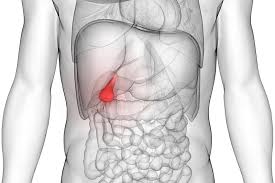
In the OK System, using the module in the VB meridian, we determine: the condition of the gallbladder and bile ducts, and the temperament associated with the motor function of the human body.
Between 1980 and the present day, more than 500 patients with chronic musculoskeletal disorders, as well as sclerosis and stone formation, have been examined using the OK System. Of these: 480 people suffered from spinal disorders (chronic osteochondrosis), 365 people had osteoarthritis, 495 people had stone formation, and 180 people had sclerosis (cardiosclerosis – 80 people; pneumosclerosis – 72 people; cerebral vascular sclerosis – 28 people). Some patients had a combination of these conditions. Furthermore, all these patients had gallbladder problems: chronic cholecystitis or chronic cholecystopancreatitis.
Furthermore, whilst examining over 808 patients with chronic gallbladder diseases using the OK System, we found that they had concomitant conditions: osteochondrosis (750 people); osteoarthritis (380 people); kidney stones (325 people) and gallstones (428 people). Various types of sclerosis were identified in 206 people. Combinations of these conditions were also observed.
It was found that all 1,308 people examined had gallbladder diseases in combination with certain conditions associated with metabolic disorders and the formation of ‘salt and stone deposits’: musculoskeletal disorders, sclerosis, and the presence of stones in the kidneys or gallbladder.
In all the patients examined, the VB/C module was present in their medical records.
It was determined that people whose medical records contain the VB/C module need to move more. This will reduce stagnation in their bodies, which leads to the accumulation of toxins. ‘The more movement, the cleaner the body.’ These people should not remain immobile for long periods. Otherwise, they will fall ill.
Among the patients we examined who did not have this module in their diagnosis chart, problems with stagnation in the body were significantly less common (they were present in only 2 out of every 100 people).
According to our statistics, ‘slagging’ of the body is less common in people with a healthy gallbladder and bile ducts.
We identified the presence of identical psychological problems in all patients. They all had the same illnesses and the same psychological problems.
In the medical section of the OK System, the condition ‘Chronic cholecystitis’ has the formula RP/ABC/±2 +VB/C/±2, which in the psychological section means ‘lack of free time to realise one’s ideas’. Whereas those patients whose diagnosis charts did not contain this formula had time to pursue their favourite activities.
The formula R/C + VB/C/-2 in the medical section indicates the presence of gallstone disease, whilst in the psychological section it signifies ‘disappointment due to the inability to take revenge’.
The formula RP/C + VB/C indicates the condition ‘cholecystopancreatitis’ and characterises the presence in a person of ‘picky behaviour, capriciousness and, under additional conditions (in combination with certain other red modules in the diagnostic chart) – a tendency towards criminal behaviour’.
Problems with the gallbladder lead to musculoskeletal disorders, sclerosis and stone formation.
For example:
Osteochondrosis is a chronic condition associated with impaired blood circulation in the intervertebral discs.
In the OK System, the formula for osteochondrosis is as follows:
– R/ABC/-2 + V/B/±2 + VB/AC – this is grade 1 osteochondrosis (‘unfulfilled desire to take revenge on the offender’).
– R/ABC/-2 + V/A/±2 + VB/AC – Grade 2 osteochondrosis (‘obsessive thoughts of revenge against the offender’).
– R/ABC/-2 + V/C/±2 + VB/AC – grade 3 osteochondrosis (‘heightened emotional response to the insult and a desire for revenge’).
Osteoarthritis – a chronic degenerative-dystrophic joint disease characterised by the destruction of articular cartilage and the joint capsule, as well as deformation of the bone itself.
The OK System formula for osteoarthritis is MC/C + V/C + VB/C; in psychological terms, this formula signifies ‘disappointment in a loved one’.
Atherosclerosis is a chronic disease of the arteries that arises due to disturbances in fat and protein metabolism and is accompanied by the deposition of cholesterol and lipoproteins on the inner walls of blood vessels. These deposits form as plaques. Due to the subsequent proliferation of connective tissue (sclerosis) within them and calcification of the vessel walls, deformation and narrowing of the lumen occur, potentially leading to vessel occlusion. The main danger of atherosclerosis is a significant increase in the risk of developing coronary heart disease.
The formula for sclerosis is MC/C + VB/C; in psychological terms, it is ‘the desire to break a promise to keep someone else’s secret’.
Formula MC/C + IG/C + V/C + VB/C – atherosclerosis of the cerebral vessels (“the desire to take revenge on members of the opposite sex due to unrequited love in youth, emotional distress over life’s setbacks”).
Cardiosclerosis is one of the dangerous forms of ischaemic heart disease. It manifests as a pathology of the heart muscle (myocardium), in which connective tissue proliferates. It forms scars of varying sizes, replacing dying myocardial fibres, and causes deformation of the heart valve.
The size of the heart muscle increases, which gradually leads to cardiac hypertrophy and a reduction in its contractile capacity.
Formula MC/C + C/C + VB/C – cardiosclerosis (‘resentment towards a loved one and a desire to take revenge on them’).
Formula MC/C + P/C + VB/C – pneumosclerosis (‘resentment towards an older relative of the opposite sex and a desire to take revenge on them’).
All the above formulas according to the OK System are presented in the diagram below:

Pic 2
In the OK System, the formulas for the aforementioned conditions always include combinations of red (pathological) modules in the MC, RR, V and VB meridians.
In the psychological aspect of our system, this signifies an heightened emotional reaction to an offence caused by the actions of a loved one, accompanied by a desire for revenge.
Conclusion.
Diseases of the musculoskeletal system, sclerosis and stone formation are directly linked to the function of the gallbladder. They share the same psychosomatic interrelationships. They can be classified as a single group of diseases associated with metabolic disorders and causing the accumulation of toxins in the body.
People prone to chronic cholecystitis (whose medical records include the VB/C module) should exercise more. With a lack of exercise, their metabolic processes slow down, leading to stagnation, vascular sclerosis and the development of osteoarthritis, osteochondrosis, and kidney and gallbladder stones. ‘The more you move, the cleaner your body’.
People should devote more time each day to their physical health. As we age, it is essential to exercise regularly, watch what we eat and constantly think about how to maintain our physical fitness. Otherwise, we may experience limitations in our physical abilities.
According to our statistics, people with a healthy gallbladder and bile ducts are less likely to suffer from ‘toxin build-up’ in the body.
In the prevention and treatment of the above-mentioned conditions, alongside physiological treatment methods, one must also take into account and regulate their psycho-emotional state. Without regulating one’s psychological state, a full recovery is extremely difficult. This is because an incorrect mindset will always trigger spasms in the blood vessels of the relevant internal organs.
The psycho-emotional causes of vascular spasms in the gallbladder and its ducts, which lead to cholecystitis, dysfunction of the musculoskeletal system, as well as sclerosis and stone formation, include: resentment, vindictiveness, heightened emotional reactions, capriciousness, nit-picking, lack of free time to realise one’s ideas, breaking one’s word, and a lack of commitment.
It is also important to bear in mind that one of the causes of the aforementioned gallbladder diseases is that people are unable to organise their daily routine properly. This leads to emotional distress; they live in a state of constant bustle and do not have time to enjoy life.
The older a person gets, the more they need to create the conditions to find joy and take pleasure in life.