
Prof Santhi Jayasekera
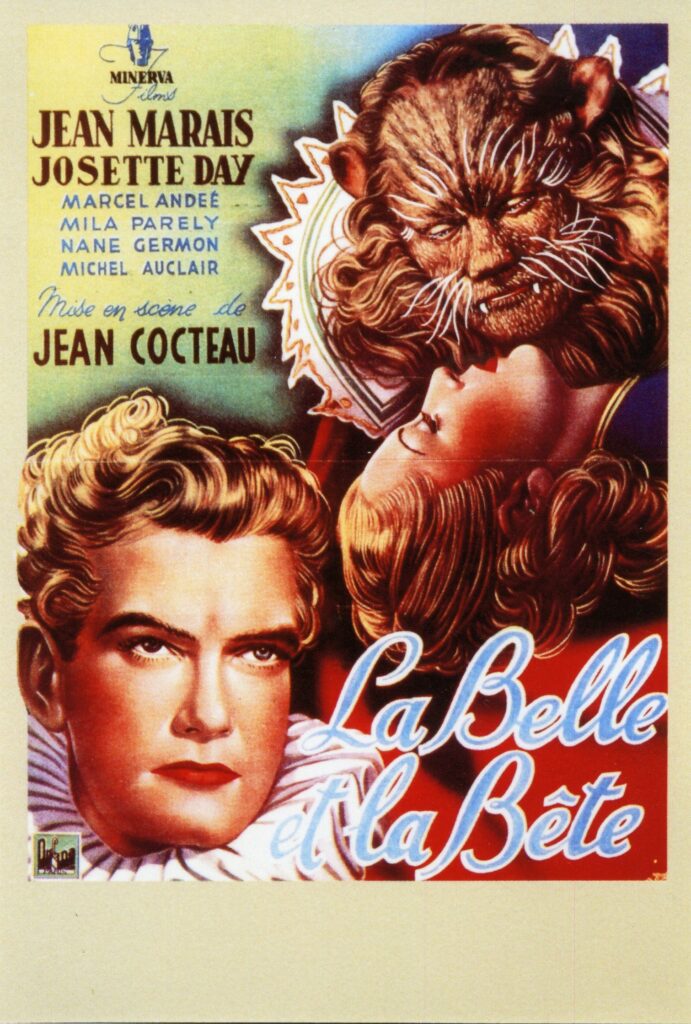
The 1946 film *Beauty and the Beast* is not merely a cinematic adaptation of the famous fairy tale, but also a unique cinematic work, created during the difficult post-war period in France. The film emerged against the backdrop of the country’s reconstruction following the Second World War, when culture and art became important tools for the revival of national spirit and identity. This paper will explore the historical context of the film’s creation, providing a better understanding of the motivations and conditions under which it was developed.
The film was directed by Jean Cocteau, a French poet, artist, screenwriter and director, whose multifaceted work had a significant influence on 20th-century art. Cocteau was one of the first to use visual and poetic means in cinema to create a distinctive atmosphere. This work examines in detail Jean Cocteau’s biography and creative career, as well as his artistic views and directing methods, which found expression in ‘Beauty and the Beast’.
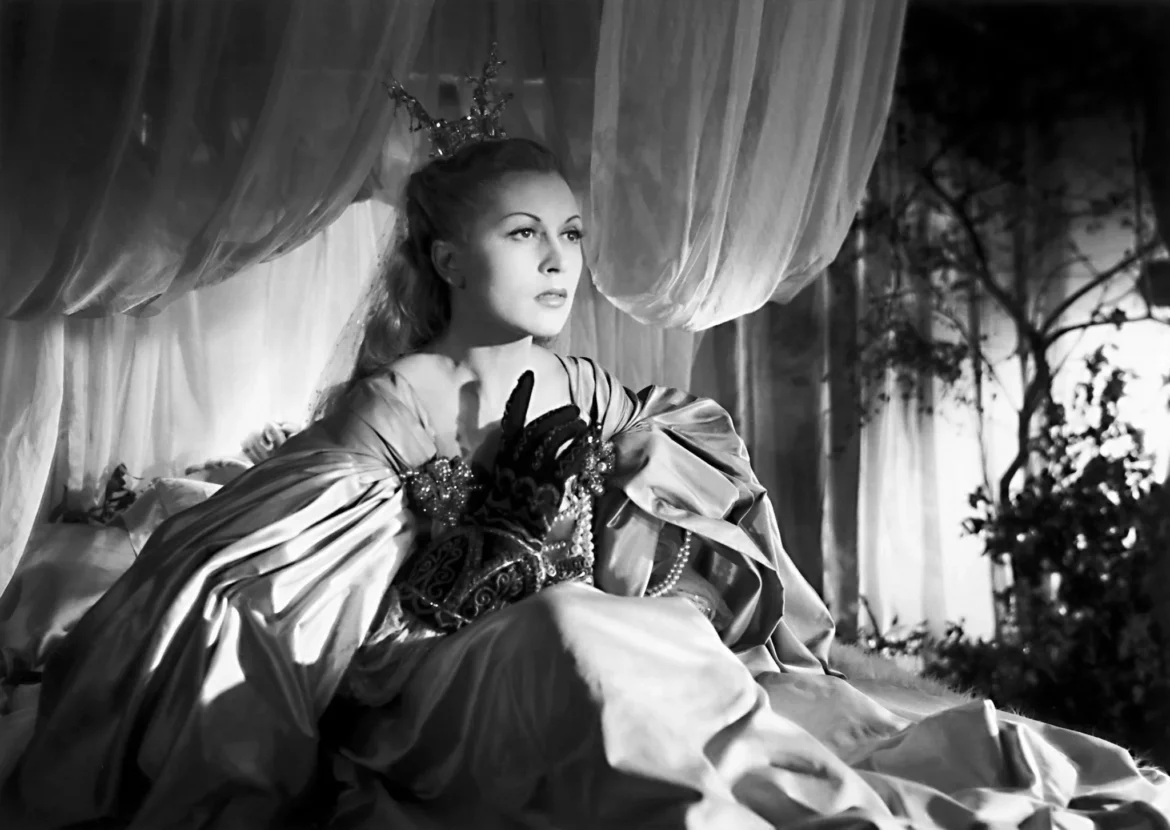
The lead roles in the film were played by Geneviève and Jean Marais. Jean Marais, who played the Beast, already had experience in theatre and cinema, and in this film he succeeded in revealing the depth of a complex character, combining kindness with inner tragedy. Geneviève, who embodied the beauty of Belle, became a symbol of purity and tenderness. An analysis of the actors’ performances will demonstrate how the performers interacted with the director to create an image that has remained etched in the memories of audiences and critics alike.
Particular attention is paid to the filming process and the technical aspects of the film. Jean Cocteau personally oversaw the design of the costumes and sets, reflecting his artistic vision and his desire to create a magical atmosphere. The use of light and shadow, symbolic imagery and expressive details helped to convey the magic and mystery of the story, whilst preserving the authenticity of the literary source material. The 1940s techniques used in the film still attract interest today due to their novelty and aesthetic value.
The reaction of the contemporary public and critics will also be examined. The film was perceived as an unusual and deeply moving work, which attracted attention for its aesthetic qualities and philosophical undertones. Foreign and French reviews will help to understand how the film influenced audiences and how perceptions of ‘Beauty and the Beast’ have evolved over time.
In the final section of this work, we will examine the film’s influence on the development of world cinema and contemporary interpretations. Jean Cocteau’s film held an important place amongst film adaptations of classic fairy tales, setting standards in terms of visual and narrative style. Remakes and contemporary studies show that the 1946 ‘Beauty and the Beast’ remains an important subject of study and inspiration for filmmakers and cinema artists.
Thus, this study addresses a wide range of themes: the historical context of the film’s creation, the personality and work of director Jean Cocteau, the contributions of the lead actors, the specific features of the artistic and technical filming process, as well as the film’s reception and its legacy. This comprehensive approach will enable a thorough assessment of the significance of the 1946 film “Beauty and the Beast” within the context of cinema and culture.
Historical context of the film’s creation
Following the liberation of France in 1944, the country’s film industry found itself in a state of deep crisis. During the German occupation, much of film production was controlled by the censors and creative freedom was severely restricted. Many filmmakers left France or worked underground in order to preserve the traditions of national cinema. After the end of the war, French cinema faced the task of rebuilding not only the industry, but also the cultural heritage, which had been severely shaken by a decade of strict bans and political repression.
The post-war period was marked by a desire to rethink French identity through art. Cinema turned its attention to themes of human emotions, the imagination and the inner world, in response to the severe moral and social trauma caused by the war. There was a shift away from the realism and naturalism that had dominated the 1930s towards symbolism and expressionism, which allowed filmmakers to express complex psychological and philosophical ideas through visual metaphors and allegories. This trend was reflected in films dealing with fantastical and mystical subjects.
The film industry of the time suffered from a lack of technical and financial resources, which required directors to adopt a creative approach to production. It was under these conditions that a new style developed, in which the expressiveness of the images and artistic composition took precedence over mass production and grandeur. Theatricality and stylisation were a deliberate choice, allowing the constraints of limited resources to be overcome and unique visual worlds to be created.
At that time, ‘Beauty and the Beast’ (1946) became something of a cultural phenomenon, reflecting a desire to restore a sense of beauty and wonder to the audience through cinema. Its production coincided with a period of exploration of new forms in the art of filmmaking, where filmmakers used fairy-tale plots to develop subtle visual solutions and new artistic techniques. The film was not merely a commercial venture, but also an act of artistic rebirth that opened up prospects for the development of auteur cinema in post-war France [10].
Thus, the creation of *Beauty and the Beast* took place against a backdrop of major transformations in French society and the film industry, at a time when culture played a key role in the process of rebuilding national identity. It was in this context that the figure of the director, capable of bringing together literary heritage, poetic aesthetics and cinematic innovations, took on particular significance. At the centre of this study is Jean Cocteau, a director whose vision and creative method defined the film’s appearance and made it a cultural symbol of the era.
Jean Cocteau: director and artist
Jean Cocteau (1889–1963) was born in Maisons-Laffitte, near Paris, and developed an interest in art and literature at a very early age. His artistic career began in 1906 with poetry, when he published his first collections of poems, such as La Lampe d’Aladin and Le Prince insouciant. His artistic thinking was influenced by Serge Diaghilev’s Russian ballet, the music of Igor Stravinsky, as well as the works of Pablo Picasso and the poetry of Guillaume Apollinaire. In addition to poetry, he also devoted himself to playwriting, penning the famous plays *Orphée* and *La Voix humaine*, which cemented his reputation as an innovator in the field of theatre [6].
Cocteau regarded poetry as a fundamental art form, attributing to it paramount importance for all forms of creation. His works were distinguished by the synthesis of different art forms, a trait that was also reflected in his cinema. As a director, he strove to imbue his films with a poetic dimension and visual expressiveness, creating a distinctive atmosphere of mysticism and symbolism. Among his cinematic works, Beauty and the Beast (1946) holds a special place thanks to its combination of fantasy and melodrama, as well as its innovative approach to imagery and set design [9].
In his work as a director, Cocteau incorporated artistic techniques drawn from painting, poetry and theatre, which enhanced the significance of the images and created within the film an impression of a fairy-tale world, filled with metaphors and allegories. His unique style involved not only directing the filming process but also participating directly in the design of the sets and costumes, thereby transforming the film into a complex work of art. This approach gave this cinematic fairy tale a particular depth and expressiveness [7].
In addition to the director’s creative talents, the careful selection of actors played a significant role in the project’s success. Jean Marais as the Beast and Geneviève as Belle brought the contrasts and complexity of the characters to life on screen, conveying the subtle emotional and psychological nuances of the characters. Cocteau’s collaboration with the actors was consistent with his artistic method, in which imagery and performance became means of expressing the film’s poetic conception [8].
The lead actors and their roles
The lead roles in the 1946 film ‘Beauty and the Beast’ were played by Josette Day, Jean Marais and Mila Parelli. Josette Day played Belle, a young woman whose inner light and kindness are the key to the Beast’s transformation. Her character is at the heart of the narrative and symbolises purity, allowing the viewer to identify with her courage and humanity. In the role of Belle, the actress conveyed not only beauty but also profound emotion, which enhances the film’s magical atmosphere [10].
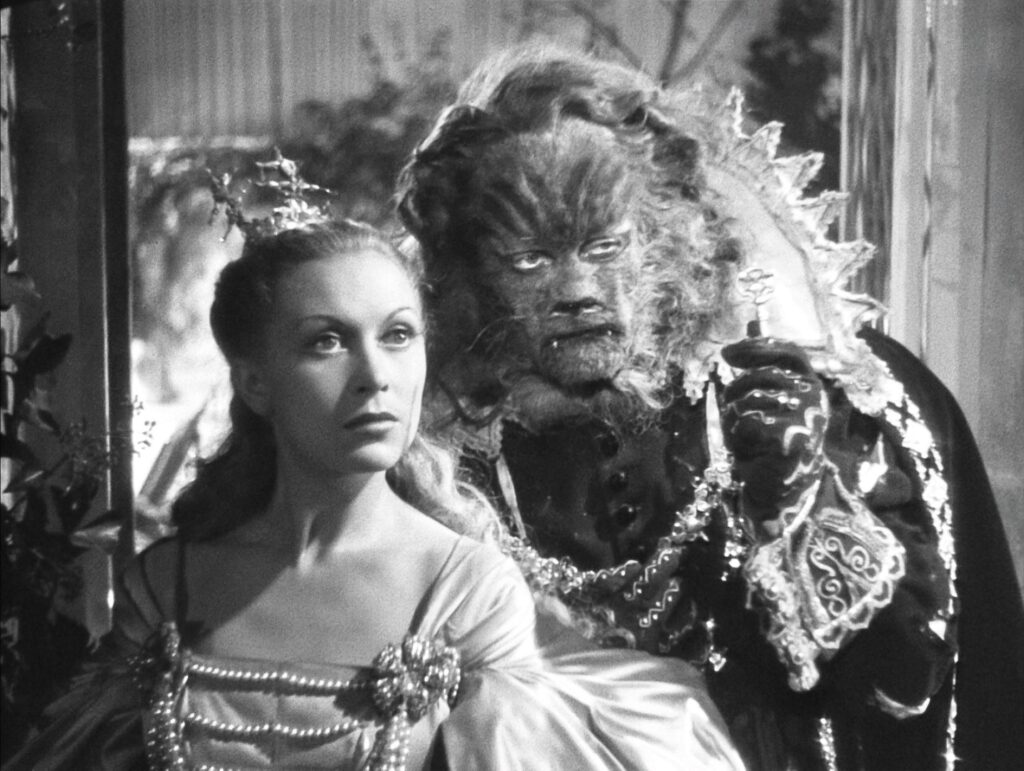
Jean Marais played three characters simultaneously: the Beast, the Prince and Avenant. The image of the Beast, both frightening and tragic, has become the embodiment of the inner conflict between animal nature and lost humanity. Jean Marais’s performance is distinguished by a subtle psychological portrayal that reveals the character’s ambiguity, whose appearance contrasts with the goodness of his soul. The roles of the Prince and Avenant add layers of mystery and drama, emphasising the themes of transformation and duality, which greatly enrich the narrative structure [3].
Mila Pareli, in the role of Félicité, complements the film’s main narrative by representing an element of Belle’s environment that contributes to the development of her character and the plot context. Félicité’s role serves as an important link, highlighting the social and emotional aspects of the fantasy story, lending it realism and depth [18]. Each of these characters makes a unique contribution to the film’s artistic vision. Belle embodies hope and light, the Beast embodies mystery and tragedy, and Félicité embodies the human context. The interaction between the actors has created a dynamic that helps the viewer immerse themselves in the film’s magical world and better understand its philosophical subtext. Thanks to exceptional performances, ‘Beauty and the Beast’ has become a work in which the characters are perceived not only as fairy-tale figures, but also as vehicles for meaning and deep emotions [12].
Plot and literary basis
The 1946 film “Beauty and the Beast” (La Belle et la Bête) is a cinematic adaptation of the classic tale by Jeanne-Marie Leprens de Beaumont, first published in 1757. The plot centres on the story of a young girl, Belle, who, to save her father, willingly agrees to live in a mysterious castle inhabited by the Beast. This character is not merely a frightening creature, but an enchanted prince whose true nature is revealed through Belle’s love and devotion. The narrative revolves around the theme of transformation through inner beauty, where love becomes a force that breaks the spell and reveals the heroes’ true faces.
The foundation of the tale recounts the struggle between the external and the internal, external horror and inner goodness, which was a traditional theme in European fairy tales; however, Jeanne-Marie Lepreens de Beaumont, in her rewriting, emphasised moral education and the power of self-sacrificing love. These ideas lie at the heart of the film’s plot, but in Cocteau’s hands, they take on a unique form of poetic and visual interpretation. Unlike more mundane or moralising interpretations, the director delves into the world of symbolism, using the tale as a metaphor for spiritual and creative transformation.
Jean Cocteau worked at length on the image of the Monster, intending to portray it not simply as a beast, but as a complex creature with its own mythological history. Initially, he wanted to give the character a deer’s head in honour of the ancient deity Cernunnos, which would have emphasised the link with natural and pagan beliefs, but under the influence of Jean Marais, he ultimately opted for a more human yet simultaneously more mysterious appearance, which highlighted the character’s inner tragedy and reinforced the contrast with his frightening appearance [16].
In Cocteau’s adaptation, the tale becomes not only the narrative framework but also the basis for creating a visual series rich in symbols and visual associations. The elements of the castle, the interiors and the costumes—everything is designed to create a mystical and fairy-tale atmosphere, where reality blends harmoniously with fantasy.
The costumes, designed by the Paken fashion house with the involvement of the young Pierre Cardin, play a significant role in the artistic vision, emphasising the characters’ personalities and their inner worlds. The film’s black-and-white palette enhances the interplay of light and shadow, which serves as a visual language to express the struggle between opposites: light and darkness, beauty and ugliness, good and evil.
Thus, the plot of the classic tale, as interpreted by Cocteau, is transformed into a poetic parable about the power of love and understanding. The director chooses not to follow the plot literally and turns instead to symbols conveyed through artistic imagery and visual solutions. The film’s distinctive style, which combines realism and surrealism, tenderness and horror, shapes a unique perception of the tale, making it relevant and expressive for the viewer. In this context, the visual design serves not merely as a backdrop, but as a tool for revealing the characters’ meanings and emotional states [17].
Conclusion
The study of the 1946 film ‘Beauty and the Beast’ has provided an in-depth understanding of the cultural and artistic significance of this work. Analysis of the historical context in which the film was made has shown that it was a response to the profound upheavals of the post-war period in France and a reflection of a desire to revive national consciousness through art. The director Jean Cocteau, a multi-talented poet, artist and playwright, created a film in which the literary tale found a new poetic and visual form, transforming into a unique artistic expression.
An examination of the biographies and creative contributions of the main actors highlighted their importance in conveying the versatility of the imagery and the emotional depth of the characters. Through their subtle performances, Jean Marais and Josette Day embodied the complexity and contrasts of the central characters, lending the film authenticity and vitality. The film’s literary foundation was revealed through the prism of the director’s vision, where the classic plot was transformed into a symbolic parable about love that transforms the inner world of man.
The technical and artistic aspects of the production—from the cinematography and set design to the costumes and make-up—proved to be key elements in creating a mystical and magical atmosphere. The use of contrast between light and shadow and stylised interiors immersed the viewer in a unique space, where visual solutions reinforced the story’s philosophical content. This blending of theatrical and cinematic techniques made the film a work of art that was both theatrical and organic.
The reaction of critics and audiences upon its release showed that the film elicited both admiration for its creative audacity and the depth of its imagery, and caution due to its distinctive style and narrative pace. However, over time, ‘Beauty and the Beast’ has attained classic status, exerting a considerable influence on the development of auteur and fantasy cinema in Europe and worldwide. Contemporary interpretations and remakes of the story demonstrate its enduring relevance and its ability to adapt to new cultural and technological contexts, confirming the universality and versatility of the plot.
Overall, this analysis has confirmed that Jean Cocteau’s film was not merely a cinematic adaptation of a fairy tale, but an artistic phenomenon in its own right, transcending the boundaries of the genre. Its influence on world cinema is reflected in the expansion of cinematic forms and the introduction of poetic and symbolic approaches to visual storytelling.
Thus, the 1946 ‘Beauty and the Beast’ remains a monument to creative courage and depth that continues to inspire artists and audiences alike, sparking an interest in exploring the boundaries of cinematic art.