Abbasazade Farah — PhD, International University of Fundamental Education (MUFO -Oxford), (Azerbaijan, Baku)
Abstract: The article describes the results of an experimental study of self-esteem in women during pregnancy and early motherhood.
Keywords: levels of self-esteem, emotional states of pregnant women: withdrawal, self-attachment, internal conflict, self-blame.
Pregnancy and motherhood are often accompanied by complex emotions in women, which affect their self-esteem. In our study, we used methods to help identify key issues for women and methods to determine the level of self-esteem in women during pregnancy and motherhood. The results of the study are presented below.
Questionnaire ‘Determining the level of self-esteem’ by S. V. Kovaleva:
As a result of processing the respondents’ answers in two stages, during pregnancy (PB) and during motherhood (PM), it was found that the level of low self-esteem in (PB) was 43% (22 women), in (PM) it was 58% (29 women), the level of average self-esteem in (PB) was 36% (18 women), in (PM) it was 38% (19 women), and the level of high self-esteem in (PB) was 22% (11 women), in (PM) it was 4% (2 women). This indicates that women’s self-esteem decreased. The results were processed in percentages (see Table 1).
Table 1.
Scores obtained at two stages using the method developed by S.V. Kovaleva
Levels Pregnancy period Motherhood period
| Levels | Pregnancy period | Motherhood period |
| Low | 43% | 58% |
| Average | 36% | 38% |
| High | 22% | 4% |
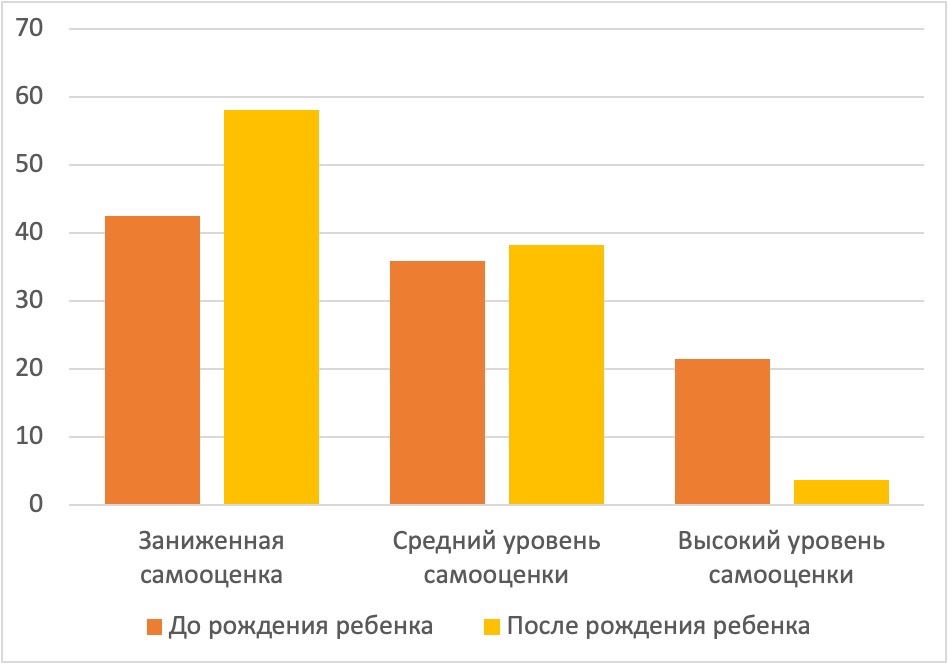
Figure 1. Percentage of self-esteem in two periods
It is known that after giving birth, women experience additional difficulties, emotional distress and poor health. Therefore, indicators change after childbirth. Analysis of the questionnaire results showed that the level of low self-esteem changed by 16%, which indicates that 7 women’s self-esteem decreased after childbirth. In total, 29 women were found to have low self-esteem. The level of average self-esteem changed by 2%. This indicates that one woman’s self-esteem decreased during motherhood. In total, 19 women were found to have average self-esteem. The level of high self-esteem changed by 18%. This indicates that nine women’s self-esteem decreased during motherhood. Overall, only 2 women had a high level of self-esteem (see Diagram 1).
It should also be noted that of the 50 women, only six were aged 30 or older. Four of them had given birth for the second or third time. Considering their age and number of births, two women maintained high self-esteem, while the other two experienced a decline, with one falling to average and the other to low. Significant factors influencing women’s self-esteem include maturity and experience. The experience of previous pregnancies and childbirth, assessed as life experience, has a special status in the system of psychological regulation of emotional regulation of the personality.
Based on the information obtained, the patients were divided into two groups:
Those who experienced significant changes in their self-esteem
Those who did not experience any changes.
Significant differences were identified between the groups in terms of the following criteria: the complexity of childbirth, the number of hours of sleep per day, expectations regarding motherhood, and support from the husband.
Significant factors influencing women’s self-esteem before and after pregnancy also include: the mother’s health, whether the pregnancy was wanted or unwanted, whether it was the first or subsequent pregnancy, the level of stress in her life, the presence of financial problems and, most importantly, the woman’s personality traits, such as increased sensitivity, emotional instability, suspiciousness, etc.
Most women experience psychological stress during pregnancy, which can lead to negative emotional states such as anxiety and depressive symptoms. Anxiety, depression and stress during pregnancy are risk factors for adverse outcomes for both mother and child.
Anxiety during pregnancy is associated with a shorter gestation period and has adverse effects on foetal nervous development and child outcomes. Anxiety about the outcome of pregnancy is particularly strong. Chronic stress and depressive symptoms in mothers during pregnancy are associated with low birth weight, which has consequences for the child’s development. This results in a greater burden on the woman in terms of childcare. She has practically no time to take care of herself, she does not get enough sleep, and cannot always even take a shower. Added to this is a feeling of guilt for not meeting the standards imposed by society in the form of the postulate of family idyll and the happiness of motherhood, which cannot be denied. [3]
Low self-esteem expressed in feelings of inferiority, self-doubt, difficulty in establishing interpersonal contacts, constant tension and self-blame for all failures, irritability and gloom, is a precursor to postpartum depression and is currently a serious disorder with potentially devastating personal and family consequences.
Changes in social status, transformation of motor activity, the body’s need for a recovery period, the inability to have a comfort zone (alienation), loss of personal space, increased responsibility, the need for constant care, lack of practical skills, psychological friction, changes in the relationship with the husband (decrease in sexual activity, a decrease in the emotional background of sexual experiences, the emergence of physical discomfort caused by sexual life, caused by psychological factors, fatigue, financial stress, an increase in household chores), complications during pregnancy – these and many other factors form a synergistic system, in which the intensification of some factors can lead to various exacerbations in relationships, manifested in psychosomatic illnesses, which, without control and timely preventive intervention, can develop into chronic illnesses that are much more difficult to cope with.
Next, two methods (Panteleeva and Kettell) were used to evaluate nine factors using the first method and seven factors using the second method. The data (respondents’ answers) were processed and analysed using SPSS (Statistical Package for the Social Sciences). Two analysis models were used in the data analysis: descriptive statistical analysis and comparative analysis or T-test analysis. Thus, to verify whether the difference between the results of the two stages observed as a result of descriptive statistical analysis is a serious and statistically significant difference, a T-test analysis and a comparison of the average numerical values of the stages were used.
S.R. Panteleev’s self-esteem research methodology: S.R. Panteleev’s methodology was carried out in two stages. Next, the average numerical values obtained were calculated and compared with each other. The values for the four characteristics (closedness, self-attachment, internal conflict, self-blame) in the second stage were higher than in the previous stage, and for the other characteristics they were lower than in the previous stage (see Table and Diagram 3.2.2).
Table
Scores obtained at two stages using the method developed by S.R. Panteleev (n=50)
Average values of the study using the Panteleev method (X ̅)
Factors Before After
Closedness 5.12 7.34
Self-confidence 6.88 5.18
Self-direction 6.68 4.6
Reflected self-attitude 6.74 4.86
Self-worth 7.86 4.96
Self-acceptance 6.28 4.44
Self-attachment 4.52 6.62
Internal conflict 2.88 6.42
Self-blame 2.06 6.04
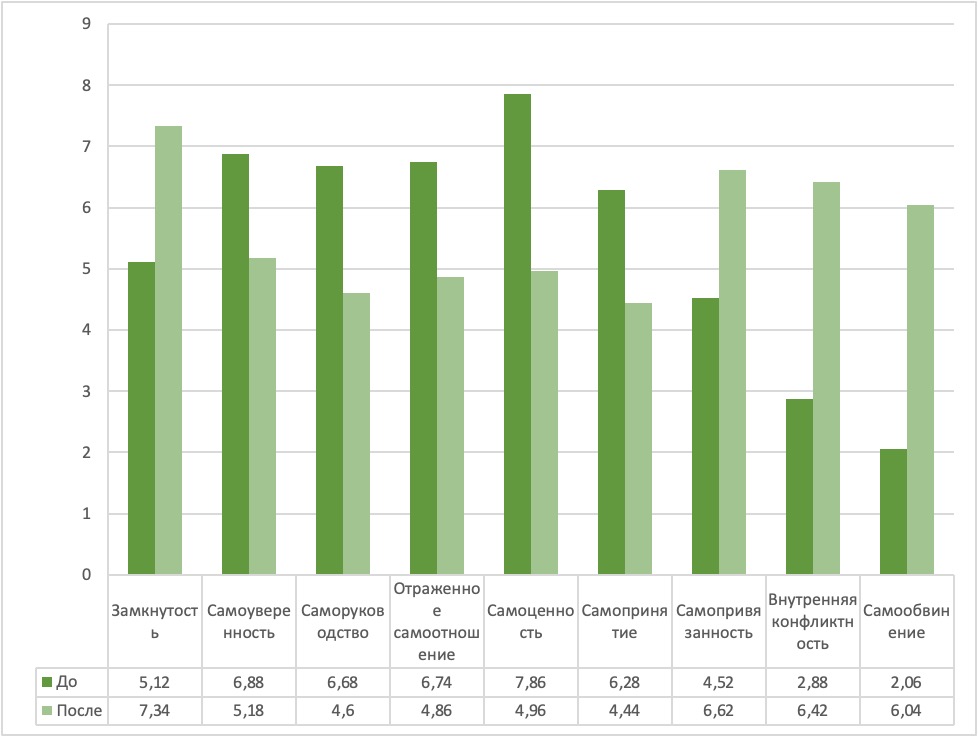
Figure 2. Scores obtained in two stages using the method developed by S.R. Panteleev (n=50)
A similar result was found in a study of women’s self-esteem before and after childbirth. This study was conducted using the method developed by S.R. Panteleev. The results of this method demonstrated the following: The ‘paired sample test’ of the ‘T-test’ analysis was used to check whether the difference between the values obtained in the two stages was significant and statistically significant at the 0.05 level. Based on the results obtained, since Sig≤0.01 for all 9 factors, it can be said that the values of the two stages were different for all 9 factors, and the observed difference is statistically significant at the 0.01 level. This shows that the difference between the two stages is serious and important (see Table 3.2.3).
When comparing the data obtained using this method with the data from S.V. Kovalev’s questionnaire, we can see similarities in the results, which allows us to see the connection between women’s self-esteem and the process of self-relationship and emotional experiences.
This study was conducted at a maternity hospital and women’s clinic in Baku and serves as the basis for the development of correctional programmes for women during pregnancy and motherhood. [2]
References
Kovalenko N.P. Perinatal Psychology. -SPB. : Petropolis Publishing House, 2014. 345 p.
Kovalenko N.P. On the Right Path to Successful Childbirth. St. Petersburg: Petropolis Publishing House, 2014. 345 p.
Perinatal Psychology and Psychiatry. A Handbook for University Students / N.N. Volodin et al. / edited by Volodin N.N., P.I. Sidorov. – Moscow: Academy Publishing House, 2009. — 255 p.
Family Culture in the 21st Century. Materials from international forums held on 5-6 December 2008 and 6-8 June 2009. Saint Petersburg / Edited by Prof. N.P. Kovalenko. Saint Petersburg: Petropolis, 2009. 280 pp.